Back to All Posts

Learn about upcoming events and the latest startup news—delivered to your inbox weekly.
The 2026 Glaring Gap Summit brought together current and future women investors at Embarc Collective for two days of candid conversations, practical investing education, founder presentations, and relationship-building designed to help more women confidently participate in startup investing.
Throughout the Summit, attendees heard from experienced investors, operators, and ecosystem leaders about building wealth, developing an investment strategy, accessing deal flow, evaluating startups, and navigating the realities of venture capital. Just as importantly, attendees had opportunities to build relationships with one another and put those lessons into practice by engaging directly with women founders building innovative companies.
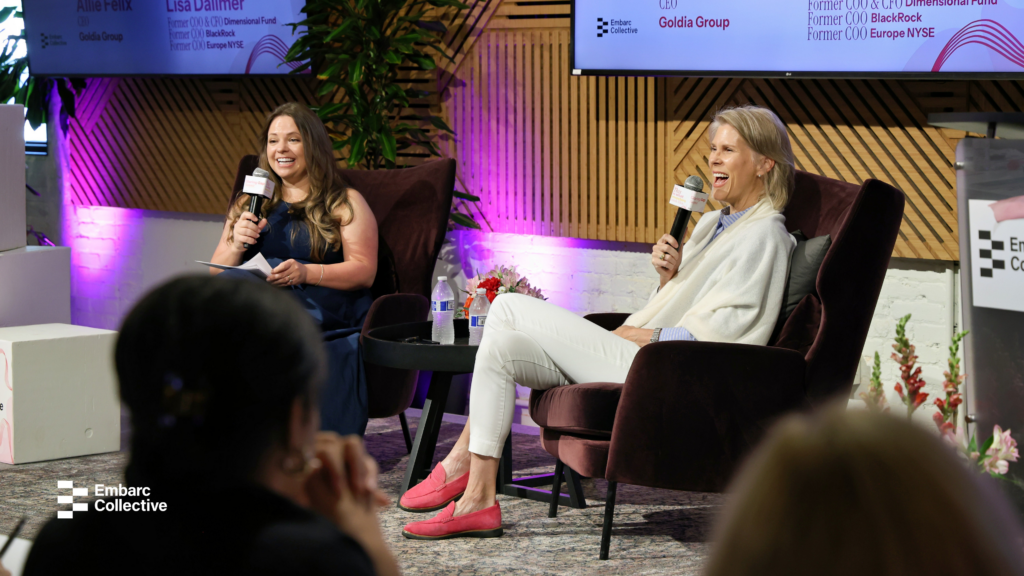
Capital is Power: Women, Wealth, & Influence
- Allie Felix, CEO, Goldia Group
- Lisa Dallmer, Board Member, University of Miami
Lisa Dallmer opened the Summit with a candid conversation about calculated risk-taking, wealth-building, and the career decisions that shaped her decades in financial services. Drawing from experiences that included joining Archipelago before its IPO and eventual acquisition by the New York Stock Exchange, Dallmer encouraged attendees to embrace a combination of resilience and growth mindsets. Rather than measuring themselves exclusively by successes and failures, she challenged attendees to consider their “try rate”: how often they are willing to pursue an opportunity without knowing the outcome.
The conversation also shifted from earning income to intentionally building wealth. Dallmer emphasized the value of professional financial guidance, diversification, and liquidity planning, particularly when wealth is tied up in equity, options, or other illiquid assets. When approaching angel and venture investing, she encouraged attendees to diversify across companies, industries, and investment stages rather than concentrating capital into a small number of opportunities.
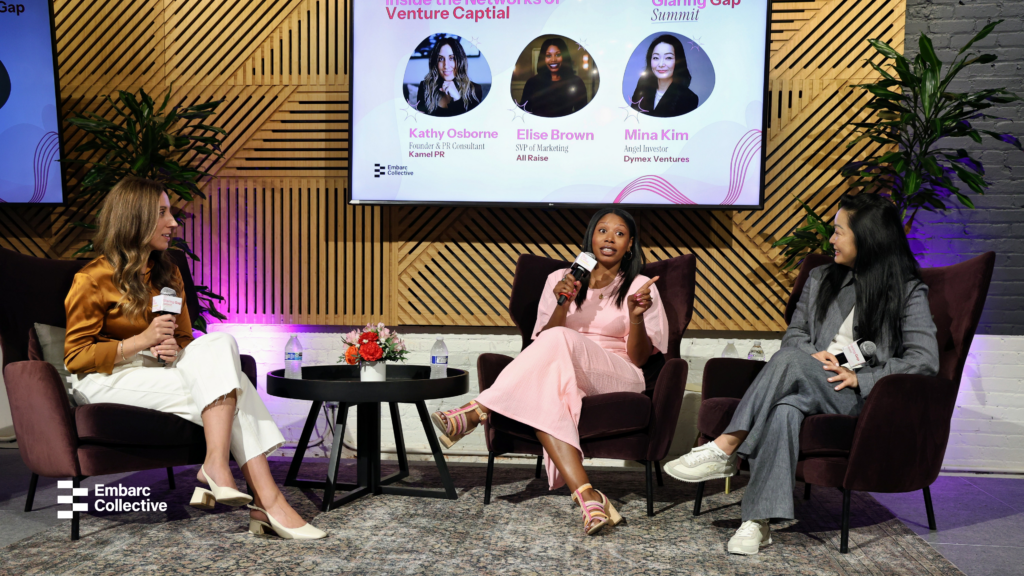
Inside the Networks That Shape Venture Capital
- Kathleen Osborne, Founder & CEO, Kamel PR
- Elise Brown, SVP of Marketing, All Raise
- Mina Kim, Angel Investor, Dymex Ventures
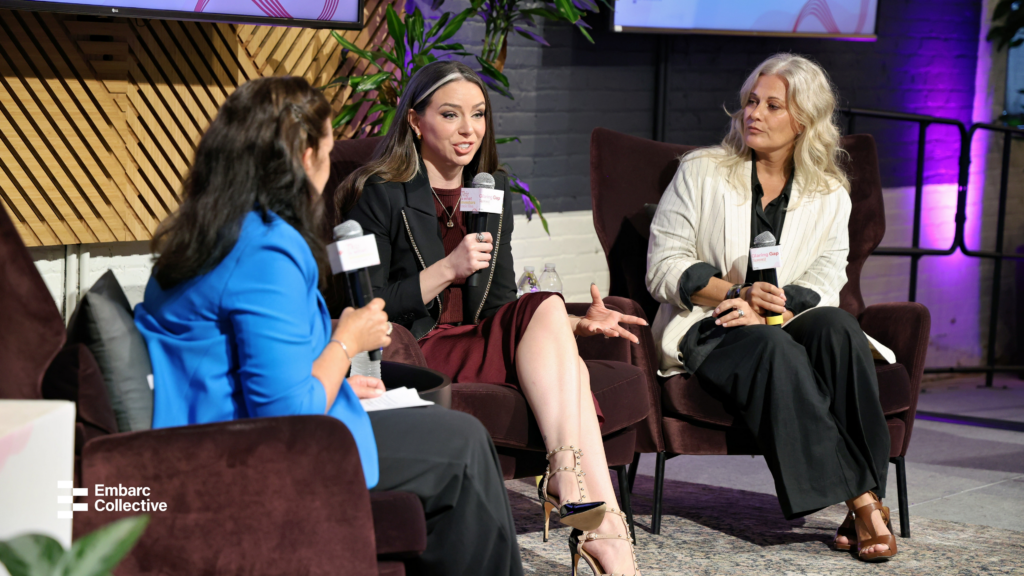
Elise Brown and Mina Kim explored how networks influence who gets access to capital and who gets the opportunity to deploy it. The numbers underscored the challenge: women represent only 18% of venture capital decision-makers, while companies with at least one female founder received 27% of the venture funding cited during the conversation. The panelists also highlighted the broader structural challenge facing emerging fund managers, who increasingly compete for capital as larger venture funds capture a greater share of available dollars.
Their advice was actionable: tell people exactly what opportunities you are looking for, build reciprocal relationships, attend the dinners and events where connections form, and don’t underestimate the value of peer networks. Investors don’t need to be the expert in every industry. Instead, confidence can come from building a trusted network of advisors and domain experts who can help evaluate opportunities. For founders, targeted outreach, repeated pitch practice, disciplined spending, and the ability to demonstrate grit, operational experience, and a network that can be activated quickly can all strengthen a fundraising strategy.
Inside the Networks That Shape Venture Capital
- Raechel Canipe, Founder & CEO, Women in Tech & Entrepreneurship
- Christy Cunningham, Strategic Advisor + Change Catalyst, inCioX
- Sue Bevan Baggott, Founder & President, Power Within Consulting
One of the Summit’s most powerful conversations came from women who had once been sitting in the same position as many attendees. The panelists shared how inherited beliefs about money, financial risk, and who gets to participate in investing initially shaped their confidence. Exposure to new communities and conversations ultimately helped change those assumptions. One panelist described learning that “venture math is really not that hard,” while another deliberately sought rooms where she was the least experienced investor so she could learn from those around her.
They also reframed investment mistakes as opportunities to learn. Their lessons included understanding how macroeconomic conditions can affect even strong companies, putting founders in front of trusted reviewers before investing, prioritizing customer obsession alongside founder passion, and using funds and co-investing to diversify risk. Above all, they characterized early-stage investing as a “team sport.” The conversation embodied the Summit’s broader purpose: creating a community where women can openly discuss money, learn together, ask questions, and build the confidence to move from observing the venture ecosystem to actively participating in it.
Demystifying Angel Investing
- Angela Lee, Franklin Pitcher Johnson Jr. Professor of Professional Practice, Columbia Business School & Founder, 37 Angels
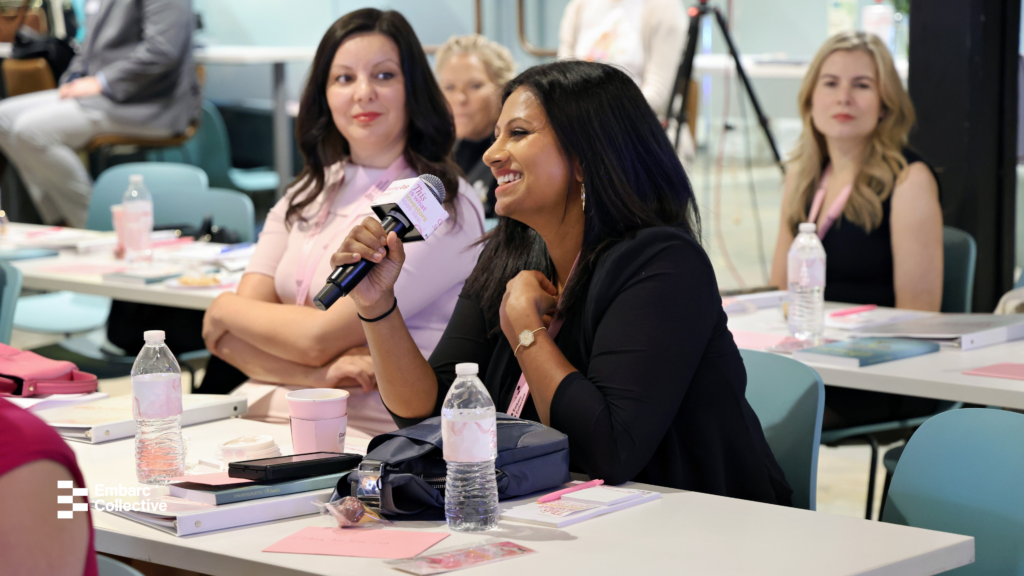
After the morning explored why more women participating in capital allocation matters, Angela Lee shifted the conversation toward how to get started. Lee brought more than two decades of experience across investing, entrepreneurship, strategy, and innovation to an interactive workshop designed to make the mechanics of angel investing more approachable.
Drawing from her experience founding 37 Angels, an angel investment network that has evaluated more than 20,000 startups and invested in more than 120 companies, Lee walked participants through fundamental concepts including venture math, valuation, due diligence, portfolio construction, and developing an investment thesis. The workshop gave attendees practical frameworks for evaluating startup opportunities and building confidence as they consider when, where, and how they may begin investing.
Inside the Investor’s Mind: What Makes a Startup Stand Out?
- Rachael Ferm, Director of Investments, Florida Funders
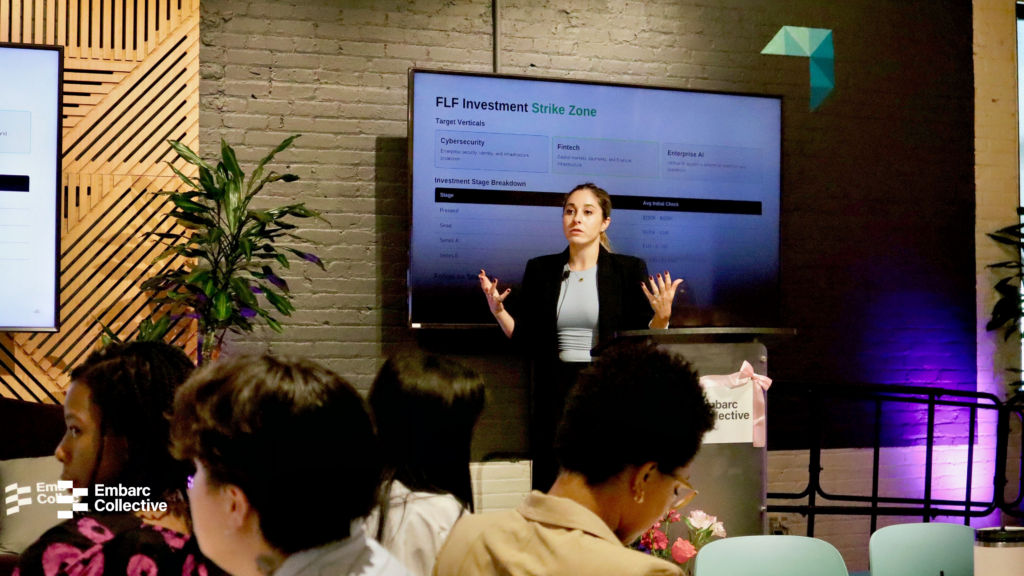
On Day 2, Rachael Ferm gave attendees an inside look at how an early-stage venture investor evaluates startups and separates meaningful signals from noise. Ferm explained that traction is less about activity and more about evidence of genuine market pull. Production contracts, expansion revenue, measurable outcomes from live deployments, clearly identified buyers, and capital efficiency can strengthen an investment case. Meanwhile, letters of intent, one-time pilots, inflated revenue classifications, and product roadmaps disconnected from customer needs can create concern.
She also outlined qualities that can distinguish founders during diligence: deep understanding of the problem and customer workflow, a specific ideal customer profile, command of the company’s numbers, honest awareness of what remains unproven, and speed and precision when answering investor questions. Particularly as AI rapidly changes the competitive landscape, investors must assess whether a company’s advantages can remain durable as underlying technologies evolve. For founders, that means building more than an impressive product. It means demonstrating why the business can create lasting value, attract talent, raise subsequent rounds, and ultimately scale.

Founder Presentations
With a stronger understanding of how investors evaluate opportunities, attendees then heard directly from five women-led companies. The Founder Presentations gave attendees an opportunity to apply their investor lens to real businesses while giving founders a platform to share the problems they are solving, the markets they are pursuing, and their visions for growth.
syp
- Presenter: Rima El Brouzi, Co-Founder & CTO
syp is a smart hydration startup building technology designed to help people better understand and manage their hydration. Led in part by Co-Founder and CTO Rima El Brouzi, the company combines hardware and technology to make hydration more intuitive and personalized, with applications spanning health, wellness, and performance.
Vetzi
- Presenter: Dr. Azza Diasti-Kennedy, Founder & CEO
Vetzi is a veterinarian-founded virtual care platform expanding access to veterinary expertise for pet owners. Through technology-enabled care, Vetzi helps owners navigate pet health questions and connect with veterinary support, creating a more accessible entry point into the veterinary care journey.
IYA
- Presenter: Sephany Sylverain, COO
IYA is a maternal wellness platform designed to help women navigate pregnancy and postpartum with greater access to support, information, and resources. By connecting mothers with a broader network of maternal wellness services and guidance, IYA is working to make the care journey less fragmented and more supportive.
Fractio
- Presenter: Fatin Kwasny, Founder & CEO
Fractio is transaction infrastructure for AI-native professional services. As AI takes on a growing share of knowledge work, Fractio gives firms a real-time way to attribute and price the split between human judgment and AI contribution on every milestone, so they can bill accurately for outcomes instead of hours, protect margins as AI improves, and give clients transparency into what they’re actually paying for.
Esencia Property Maintenance System
- Presenter: Angelica Bermudez, Co-Founder & CEO
Esencia Property Maintenance System is modernizing property maintenance through technology designed to simplify how property teams coordinate and manage recurring service needs. By bringing greater visibility and efficiency to maintenance operations, Esencia helps property managers streamline workflows while improving how services are delivered across their properties.
Founder Roundtables
Following the presentations, attendees joined founders for smaller Founder Roundtables designed to take the conversation beyond the pitch. The format gave founders an opportunity to expand on their companies, markets, challenges, and growth strategies while allowing attendees to ask deeper questions and put the investing principles explored throughout the Summit into practice.
The conversations also created something equally important: relationships. By bringing founders and current and future investors together in a more intimate setting, attendees could learn from one another, exchange perspectives, and build connections that extend beyond a single presentation or investment opportunity.
Closing the Glaring Gap
The 2026 Glaring Gap Summit reinforced that expanding women’s participation in startup investing requires more than encouraging women to write checks. It requires financial education, access to trusted networks, opportunities to learn from experienced investors, and spaces where women can speak openly about wealth, risk, and investing.
The impact of that community was visible throughout the Summit. Women who once attended Glaring Gap to learn the fundamentals returned as active investors to share what they had learned with the next cohort. As more women move from the sidelines to the cap table, they also have the opportunity to influence which founders, ideas, and companies receive the resources to grow.
Want to be part of the next Glaring Gap Summit? Join the 2027 Glaring Gap Summit waitlist to be among the first to receive application and event updates for next year’s Summit.