Back to All Posts
Learn about upcoming events and the latest startup news—delivered to your inbox weekly.
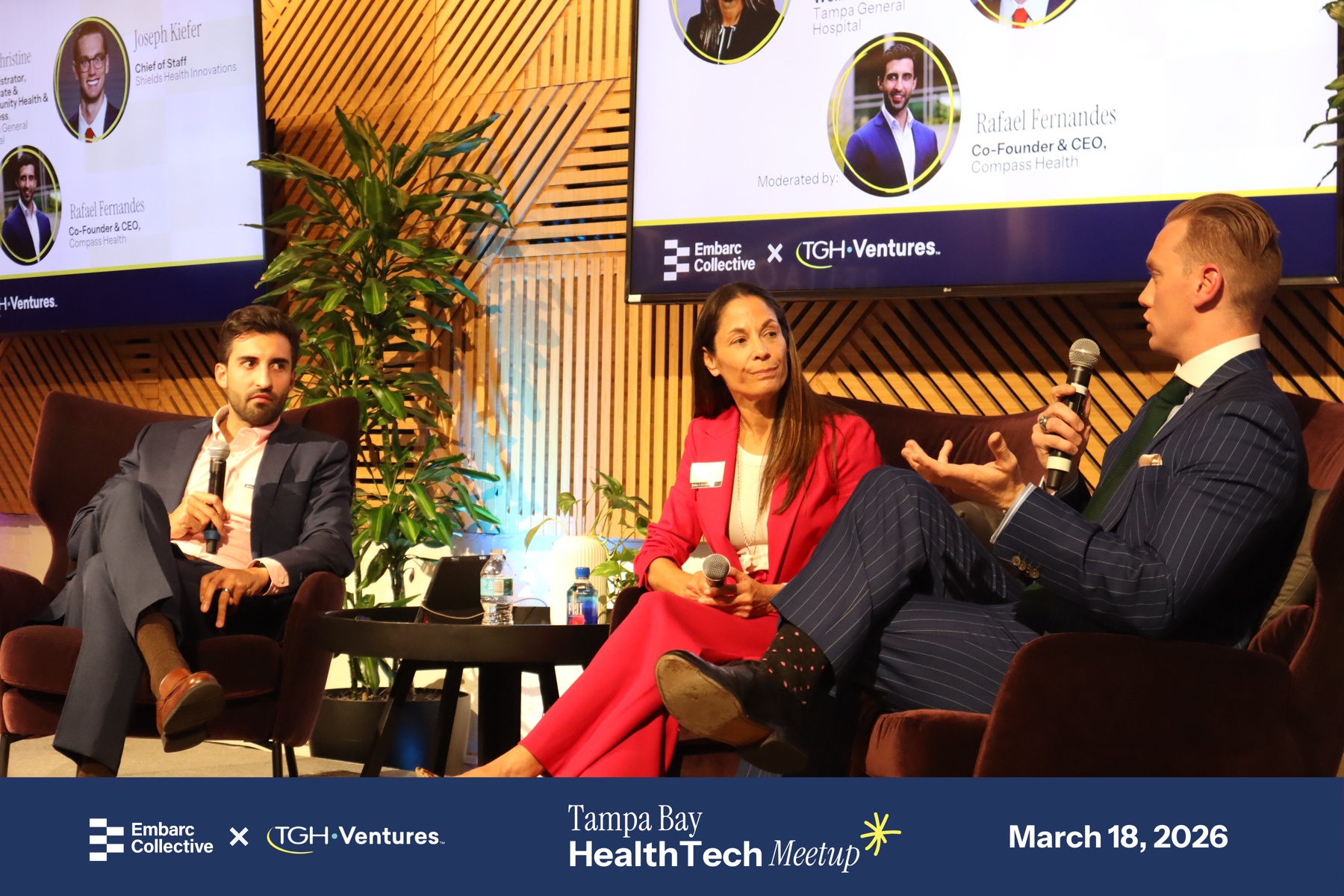
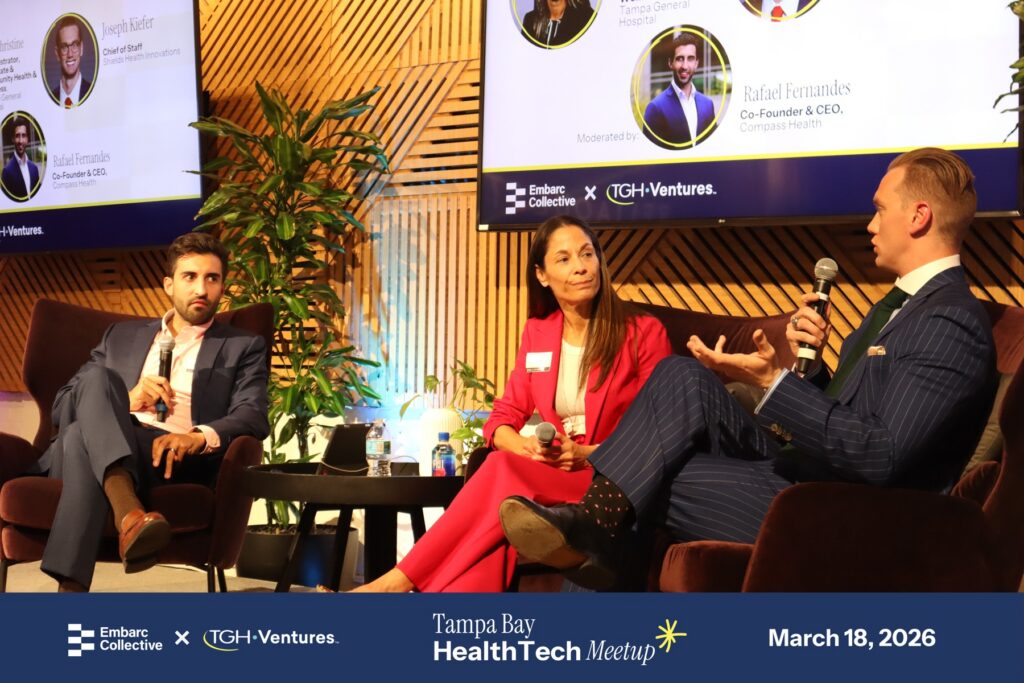
At our Q1 Tampa Bay HealthTech Meetup Powered by Embarc Collective & TGH Ventures, founders, operators, and healthcare leaders explored how technology can help build healthier communities—without compromising trust, access, or human connection.
Moderated by Rafael Fernandes, CEO & Co-Founder of Compass Health, the discussion featured Kim Christine of Tampa General Hospital and Joseph Kiefer of Shields Health Innovations.
Together, they shared practical insights on designing and deploying healthtech solutions that work in real-world settings—especially for underserved populations.
Start with Community, Then Apply Technology
The panel defined healthier communities as those where people can thrive physically, mentally, and socially—supported by access to care, food, education, and safe environments.
A key theme: there is no one-size-fits-all solution. Effective interventions must be tailored to the specific needs of each community.
Technology plays an important role—but as an enabler, not the solution itself. It can improve data collection, scale care coordination, and deliver more targeted interventions, but it cannot replace trust or human judgment.
Kim Christine emphasized starting with community needs before selecting technology, while Joseph Kiefer highlighted the importance of aligning solutions with real clinical workflows. Both underscored the need for founders to be precise about how AI and data tools actually create value.
Practical Innovation in Action
The discussion also highlighted how impactful innovation is often simple, targeted, and partnership-driven.
At Tampa General Hospital, public AED placement—done in partnership with the American Heart Association—demonstrated how accessible technology can save lives. A recently installed AED in a public location was used within weeks to respond to a cardiac emergency.
TGH also shared its school-based telehealth model, which brings care directly into lower-income schools through equipped health rooms and remote physician access. The approach reduces barriers like transportation and time off work while leveraging trusted community environments.
On the hospital-at-home front, Shields at Home uses remote monitoring and wearables to deliver acute care outside traditional settings, with long-term potential in predictive analytics and early intervention.
Across examples, the takeaway was clear: innovation doesn’t need to be complex—it needs to be effective, accessible, and grounded in real use cases.
Trust, Partnerships, and the Path Forward
The strongest point of alignment across the panel was that trust and human connection must come first.
Community engagement through direct outreach, local partnerships, and listening is essential to designing solutions that people will actually use. Without trust, even the most advanced technology will fall short.
Partnerships also emerged as critical infrastructure. A standout example is the East Tampa food pharmacy initiative, which brings together organizations like the YMCA, Feeding Tampa Bay, Modify Health, Diet ID, Uber, and Florida Blue to deliver food-as-medicine and wraparound services.
Looking ahead, the panel pointed to opportunities in predictive analytics, longitudinal patient monitoring, and lifestyle medicine—particularly where technology can support behavior change and ongoing care outside clinical settings.
Key Takeaways:
- Start with community needs—not technology assumptions
- Use technology to amplify people and care teams
- Build trust through local relationships and practical workflows
- Prioritize access and usability, especially for underserved populations
- Be precise about how AI and data create value
The tone of the conversation was optimistic—but grounded. The future of healthier communities won’t be driven by technology alone, but by thoughtful, partnership-driven solutions that combine innovation with human connection.