Back to All Posts
Learn about upcoming events and the latest startup news—delivered to your inbox weekly.

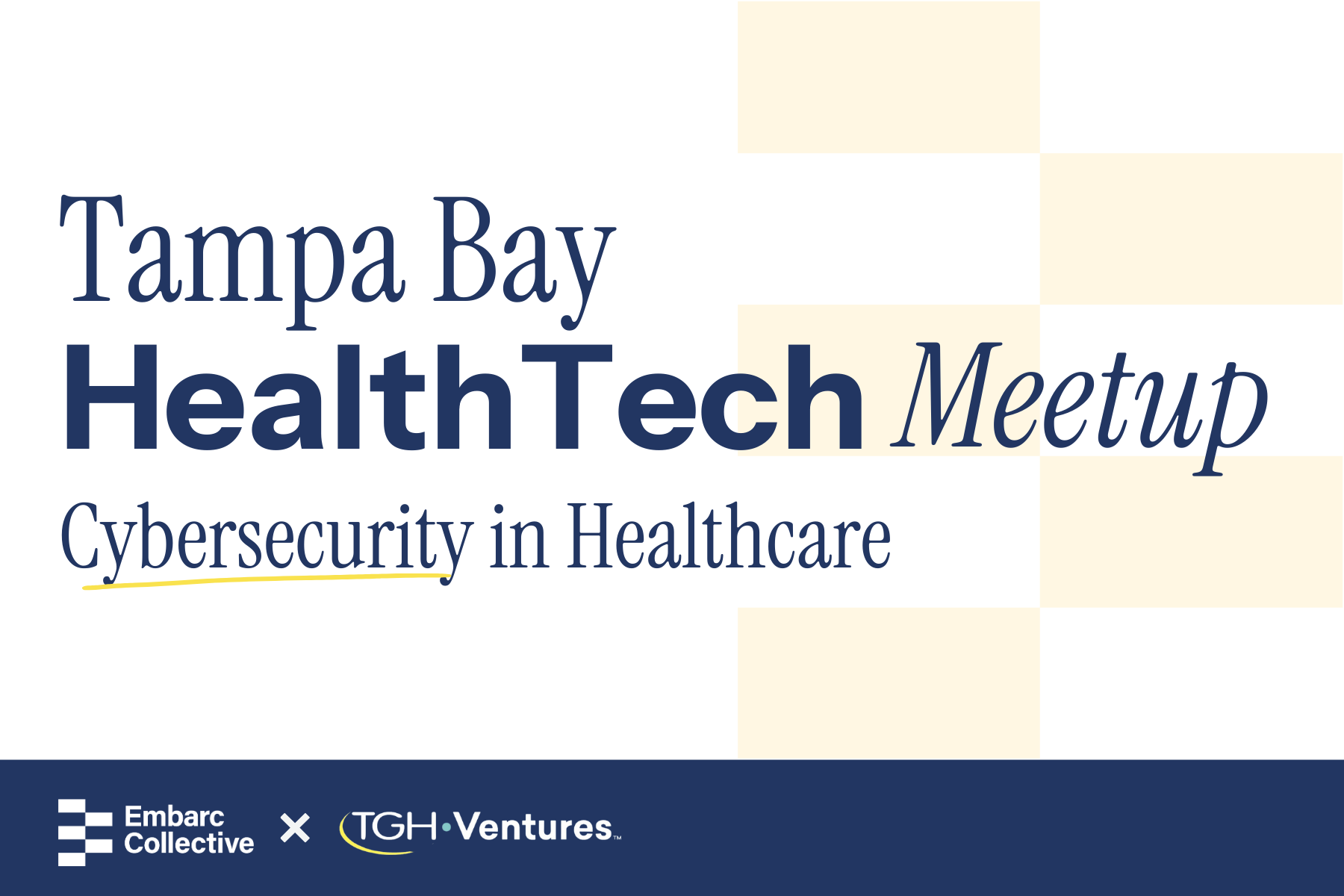
At our final Tampa Bay HealthTech Meetup of the year, powered by Embarc Collective and TGH Ventures, we convened a fireside chat focused on one of the industry’s most pressing challenges: keeping healthcare systems secure as technology and threats evolve at unprecedented speed. Moderated by Jeremy Frye, Managing Director at Uncommon Cyber and member at Embarc Collective to the conversation explored how AI, quantum computing, and regulatory pressures are transforming the cybersecurity landscape for providers and HealthTech innovators alike.
Jeremy was joined by an expert panel representing enterprise health systems, cybersecurity operations, and academic research:
- Dan Holland, Deputy Chief Information Security Officer, Tampa General Hospital
- Colin O’Connor, President of Field Operations, ReliaQuest
- Richard Rauscher, Associate Professor of Instruction & Head of Computing Infrastructure, Bellini College of Artificial Intelligence, Cybersecurity, and Computing, University of South Florida
Together, they offered a grounded, multifaceted look at what it takes to safeguard patient data, ensure operational continuity, and prepare for what’s next.
Key themes that surfaced during the discussion included:
- AI’s growing influence on both attack and defense, with attackers leveraging AI for faster reconnaissance and sophisticated phishing, while defenders now use AI in nearly all investigations to drastically reduce response time.
- The importance of strong AI governance, highlighted by Tampa General Hospital’s top-tier framework and life-saving AI deployments like its sepsis detection system.
- The looming impact of quantum computing, which will require a complete overhaul of current cryptographic systems once quantum technologies become viable.
- Persistent vulnerability drivers—phishing, misconfigurations, and third-party risks—which remain the top attack vectors even as exploitation becomes faster and more automated.
- The ongoing challenges of securing legacy medical devices, prompting organizations to rely on segmentation, isolation, and more rigorous procurement practices while modernization lags.
The Q4 Tampa Bay HealthTech Meetup underscored both the complexity and the urgency of modern healthcare cybersecurity. As AI advances, quantum computing looms, and legacy systems persist, the need for thoughtful governance, rapid response capabilities, and business-aligned security leadership has never been greater.
Our expert panel left attendees with a clear takeaway: the organizations that thrive will be those that prepare proactively, collaborate openly, and treat cybersecurity not simply as an IT function, but as a strategic enabler of safe, resilient patient care.
Want to stay up-to-date on future Tampa Bay HealthTech Meetups? Sign up to join the official email list today!