Back to All Posts
Learn about upcoming events and the latest startup news—delivered to your inbox weekly.
The 2026 Early-Stage Venture Summit, Powered by Florida Funders, brought together more than 80 founders and 45 investors for two days of high-impact conversations designed to strengthen connections between the entrepreneurs building the future and the investors helping fund it. Hosted at Embarc Collective in Tampa, the summit created a space for early-stage founders to engage directly with venture capitalists, operators, and ecosystem leaders around the realities of building and scaling companies in today’s rapidly evolving market.
Through tactical workshops, investor panels, founder showcases, and candid discussions on fundraising, go-to-market execution, pricing strategy, talent planning, and customer discovery, attendees gained actionable insights while building the relationships that increasingly define success in the early-stage venture ecosystem:
“The State of Early-Stage Venture: Navigating a New Fundraising Reality” featuring Josh Pherigo, Principal Researcher of Market Insights, Silicon Valley Bank
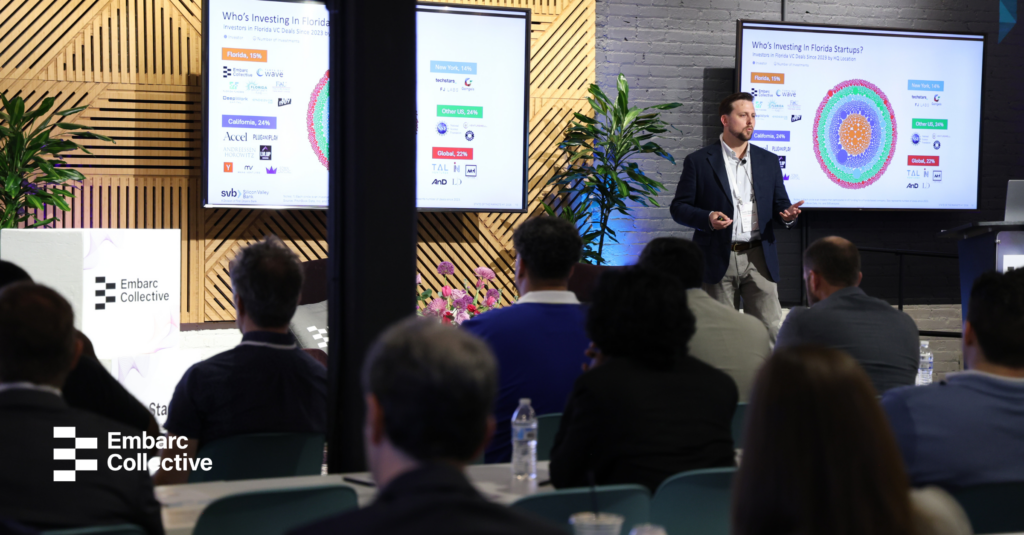
Josh Pherigo opened the summit with a data-driven look at the rapidly evolving venture landscape, highlighting how AI continues to reshape capital flows across the ecosystem. While venture investment remains strong overall, activity has become increasingly concentrated among a small group of AI-driven mega deals, with companies at the top of the market commanding a disproportionate share of capital and valuation growth. At the same time, early-stage founders are navigating a more selective fundraising environment marked by higher benchmarks, longer timelines between rounds, and increased reliance on bridge financing. Still, Pherigo noted encouraging signs of stabilization, including modest improvements in graduation rates from Seed to Series A and renewed investor appetite for strong early-stage companies with disciplined growth strategies.
The session also spotlighted Florida’s continued momentum as an emerging venture hub. With approximately $7B in venture capital on pace for 2026, the state’s ecosystem remains heavily driven by early-stage innovation, supported by organizations such as Embarc Collective, Tampa Bay Wave, and Florida Funders. Pherigo emphasized that while AI is influencing nearly every sector — from hiring trends to operational efficiency — long-term success will favor startups that balance growth with capital efficiency as markets normalize. His outlook pointed to a cautiously optimistic future, with increased early-stage activity, continued M&A momentum, and the potential for a stronger IPO environment to unlock liquidity for the broader startup ecosystem.
Founder Presentations
Select Embarc Collective member companies had the unique opportunity to showcase their businesses to Summit attendees:
REHQ
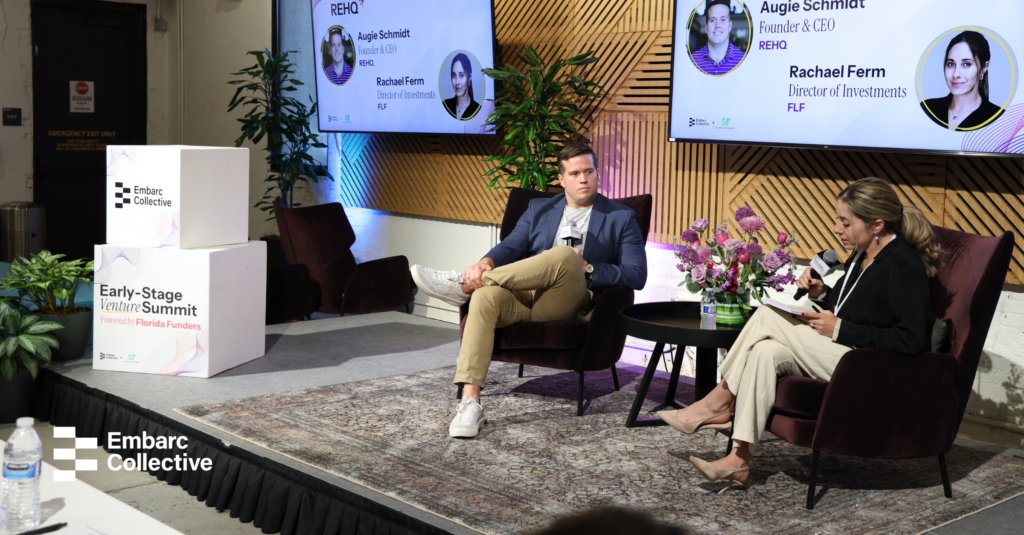
- Augie Schmidt, Founder & CEO, REHQ
- Rachel Ferm, Director of Investments, FLF
Augie presented a compelling vision for modernizing the commercial real estate industry through AI-powered dealflow automation and data intelligence. By aggregating information on nearly every commercial property in the U.S. and layering in high-quality decision-maker contact data, the platform is helping brokers, investors, and operators replace fragmented spreadsheets and outdated prospecting workflows with a streamlined, conversion-focused system. With 120+ paying customers and rapid revenue growth over the past year, REHQ underscored how AI agents and proprietary communications data could fundamentally reshape relationship-building and outbound sales across the real estate ecosystem.
COI Energy
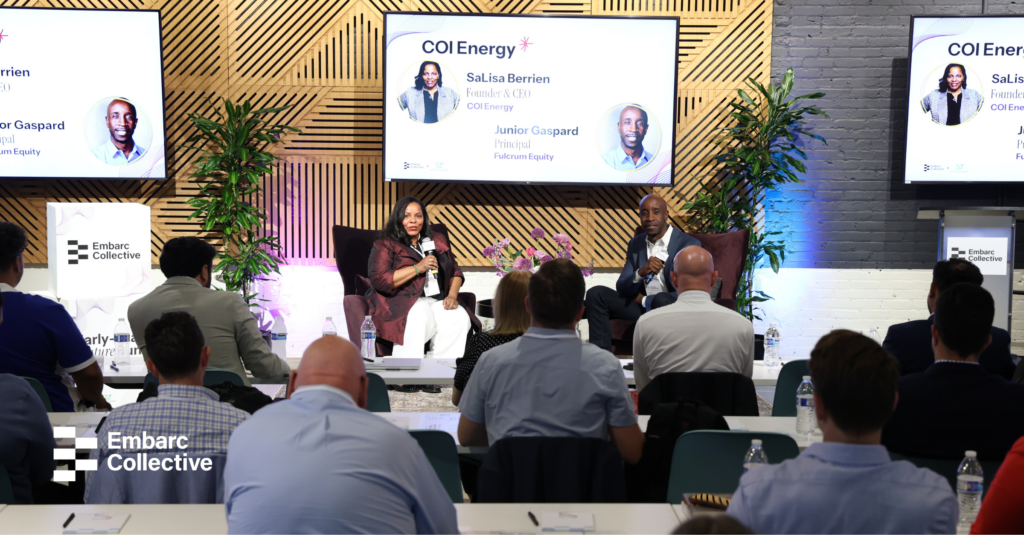
- SaLisa Berrien, Founder & CEO, COI Energy
- Junior Gaspard, Principal, Fulcrum Equity Partners
SaLisa highlighted how AI-driven energy marketplaces can unlock massive untapped value within existing infrastructure by transforming commercial buildings into “virtual batteries.” As grid demand accelerates alongside the growth of AI, EVs, and data centers, the company is helping enterprises monetize unused energy capacity while simultaneously lowering costs and improving grid resilience. With a growing enterprise pipeline, multiple large-scale pilots underway, and proprietary technology designed to optimize load flexibility in real time, SaLisa demonstrated how scalable energy innovation can deliver both economic and social impact — including its commitment to reinvesting a portion of every transaction back into underserved communities.
BiaTech
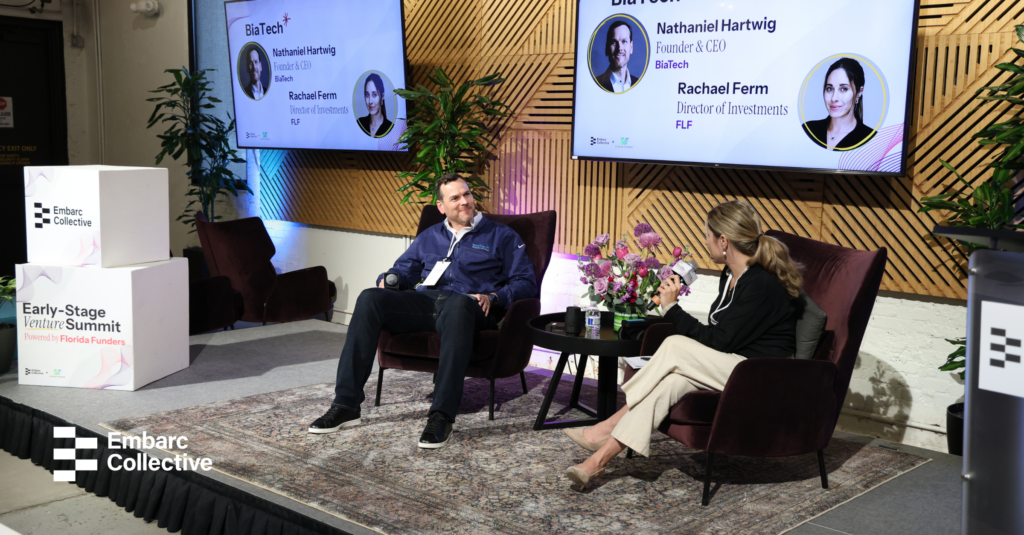
- Nathaniel Hartwig, Founder & CEO, BiaTech
- Rachel Ferm, Director of Investments, FLF
Nathaniel showcased how physics-governed AI is transforming industrial energy operations by bringing real-time intelligence directly to the edge. With 22 embedded AI systems already deployed across the energy sector, the team demonstrated how their technology combines live sensor data, computer vision, and physics-informed machine learning to help operators improve efficiency, reduce waste, and identify critical equipment issues before they escalate. Nathaniel’s insights around “physical AI” — particularly the importance of keeping humans in the loop for mission-critical systems — positioned BiaTech at the forefront of a growing movement toward smarter, safer industrial infrastructure powered by practical, deployable AI.
Compass Health
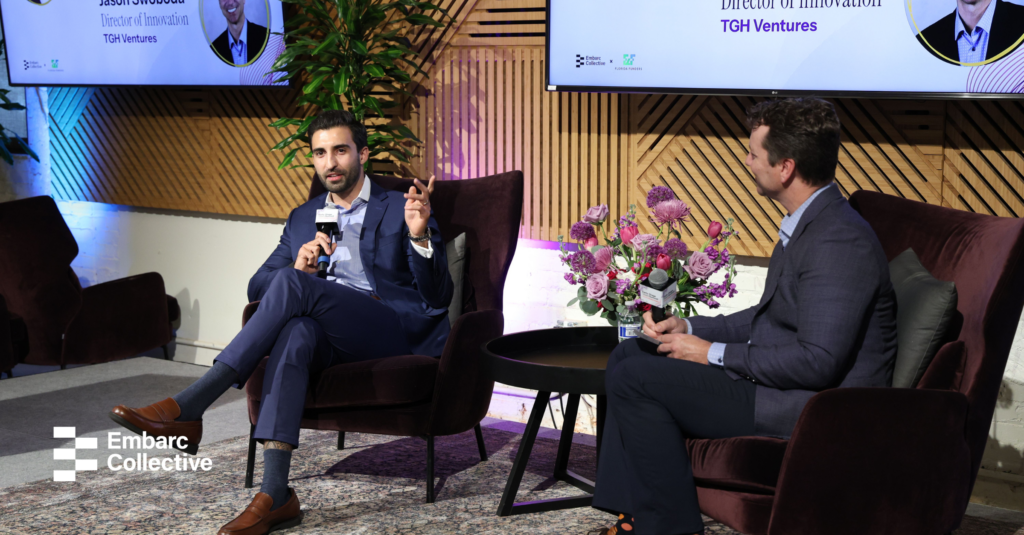
- Rafael Fernandes, Co-Founder & CEO, Compass Health
- Jason Swoboda, Director of Innovation, TGH Ventures
Rafael shared a compelling vision for reimagining healthcare navigation through a high-touch, membership-based care coordination model designed to eliminate the friction patients often face when accessing specialists and managing complex care journeys. Combining proprietary technology with around-the-clock human support, the company has already coordinated more than 180 appointments within its first few months of operation while building a trusted network of physicians capable of expediting care in days rather than weeks. By centering the patient experience and leaning into relationship-driven growth, Rafael illustrated how personalized coordination, preventative insights, and seamless continuity of care could become a defining advantage in the future of healthcare delivery.
“Founder Mindset” featuring Tony DiBenedetto, Founder, Think Big for Kids and Charmain & CEO, Appspace
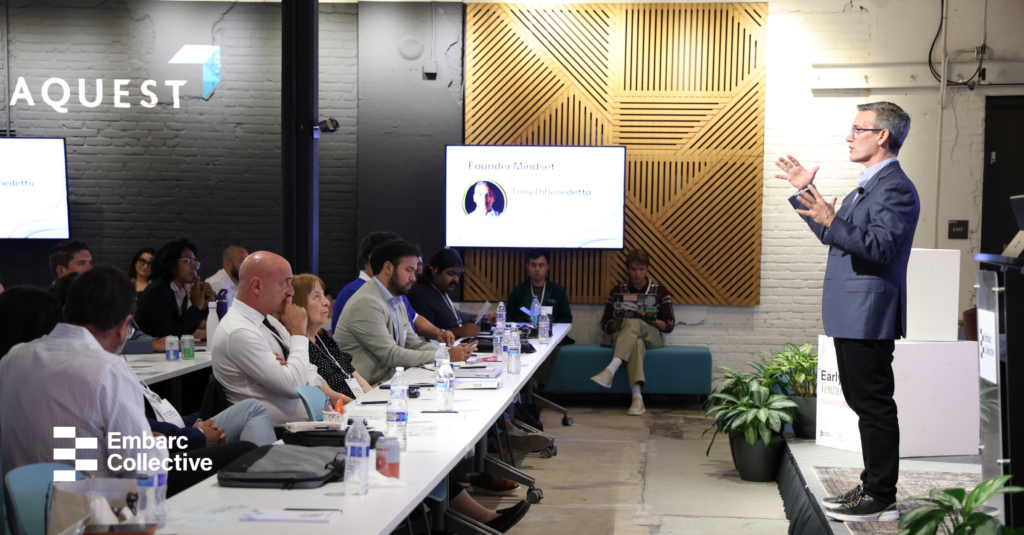
Tony DiBenedetto closed Day 1 of the summit with a candid reflection on the realities of building and scaling venture-backed companies, drawing from decades of experience leading high-growth technology businesses. Rather than presenting entrepreneurship as a linear formula for success, DiBenedetto emphasized the resilience, adaptability, and long-term thinking required to navigate the inevitable uncertainty that comes with building something new. His perspective reinforced that successful founders are often the ones willing to stay action-oriented, make difficult decisions quickly, and continue moving forward even when the path ahead is unclear.
Throughout the conversation, DiBenedetto highlighted the importance of building aligned teams, maintaining disciplined focus on customers, and using capital intentionally as companies grow. He also encouraged founders to think bigger — not only in terms of market opportunity, but in the ambition and culture they create inside their organizations. The session served as a grounded reminder that while the startup journey is often messy and unpredictable, enduring companies are built by founders who remain focused, adaptable, and deeply committed to solving meaningful problems.
“Raising Early-Stage Capital” featuring Ryan Schneider, Founder, Thrive25 and Strategy Coach, Embarc Collective
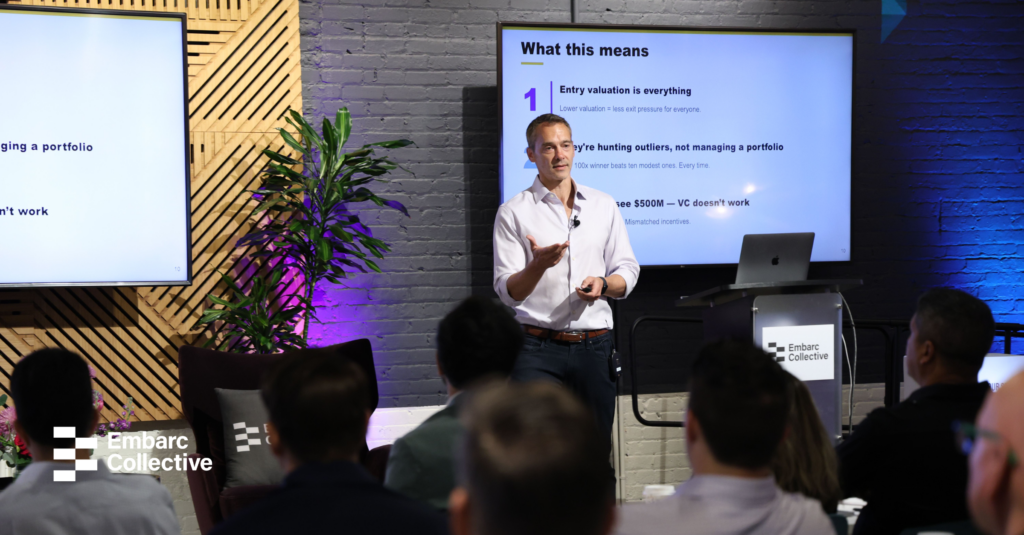
Ryan Schneider delivered a candid and tactical session on what it truly takes to raise venture capital in today’s market, encouraging founders to approach fundraising with conviction, clarity, and a deep understanding of investor expectations. Rather than focusing on vanity metrics or inflated narratives, Schneider emphasized the importance of demonstrating authentic traction, a clearly defined customer problem, and a credible path toward meaningful scale. Founders were challenged to evaluate their readiness across four critical areas — product, product-market fit, go-to-market strategy, and revenue — while identifying the single biggest blocker preventing growth before pursuing capital.
The session also highlighted the importance of aligning fundraising strategy with long-term company outcomes. Ryan unpacked the realities of venture economics, explaining why investors prioritize businesses capable of generating outsized returns and why not every startup is necessarily a fit for venture capital. From protecting founder ownership and avoiding premature valuation inflation to building milestone-driven use-of-funds plans tied to hiring and execution, the conversation reinforced that successful fundraising is less about storytelling alone and more about proving operational readiness, strategic focus, and disciplined decision-making.
Panel: “What Early-Stage Investors Look For“
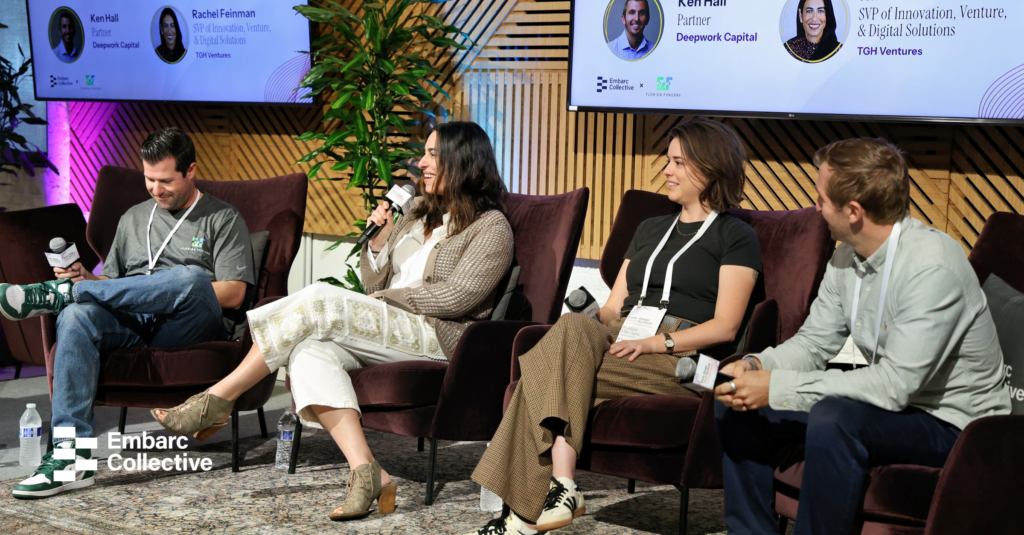
Panelists:
- Saxon Baum, Managing Partner, FLF
- Rachel Feinman, Senior Vice President, Innovation, Ventures, and Digital Solutions, TGH Ventures
- Monique Villa, Managing Partner, Daytrip Ventures
- Ken Hall, Partner, Deepwork Capital
This investor panel delivered a candid look at what separates standout startups in today’s competitive fundraising market. While mega AI rounds continue to dominate headlines, panelists emphasized that early-stage founders still win by demonstrating clear traction, sharp storytelling, and a deep understanding of their customers. Founders were encouraged to lead with their strongest proof points early — whether revenue, growth, or distribution — while showing the adaptability and market insight investors increasingly value.
The conversation also highlighted how competitive advantages are evolving in an AI-driven era, with distribution, execution, and customer relationships becoming more defensible than technology alone. Across sectors — particularly healthcare — investors stressed the importance of building strategic partnerships early and thinking nationally from day one to position companies for long-term growth and follow-on capital.
“Solving Real Problems: Mastering Customer Discovery & Customer Obsession” featuring Kate Heath, Executive Advisor + Brand and Marketing Strategy Coach, Embarc Collective
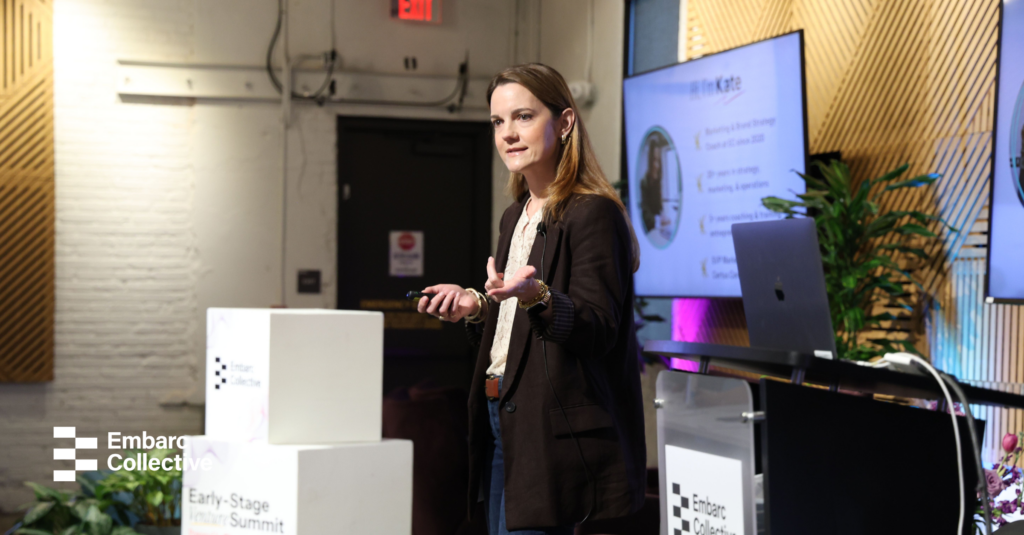
Kate Heath delivered an energetic and highly tactical session on the importance of disciplined customer discovery, challenging founders to move beyond assumptions and deeply understand the real humans behind their target markets. Drawing from her experience across companies like Boeing, Walmart, and Meta, Kate emphasized that effective customer discovery is not about pitching a product — it’s about uncovering authentic behaviors, pain points, and decision-making patterns through consistent, high-quality conversations.
The session reinforced that strong founders remain relentlessly curious and coachable, treating every customer interaction as an opportunity to validate, or invalidate, critical assumptions. Heath encouraged attendees to embrace uncomfortable questions, avoid confirmation bias, and build structured feedback loops that continue well beyond the MVP stage. The result, she argued, is not only better products but stronger companies built around genuine customer needs and lasting market demand.
“Talent Roadmapping for Fundraising Founders” featuring Kailah Matyas, Talent Strategy Coach, Embarc Collective, and Founder and Managing Partner, K & Co Talent
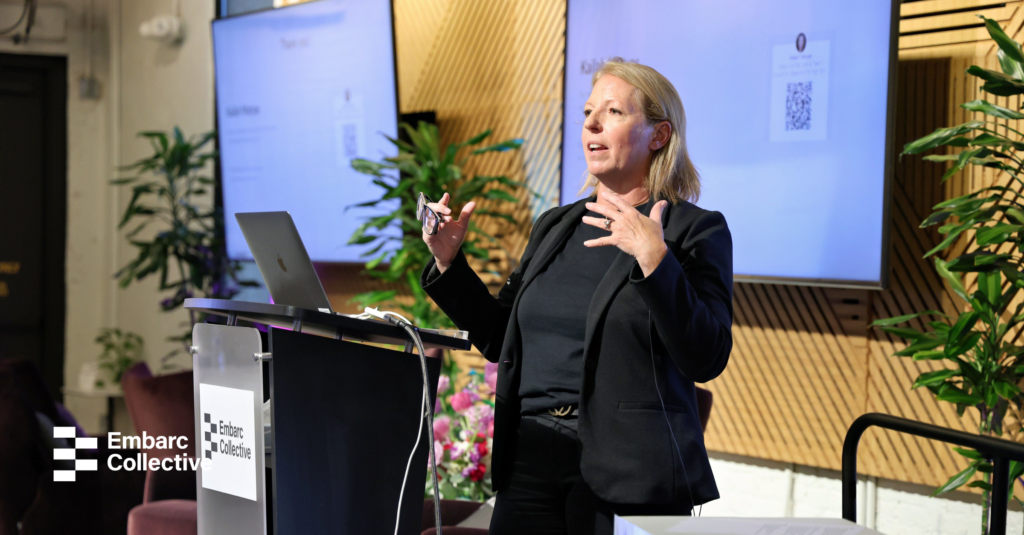
In this session, Kailah explored how investors evaluate startup teams beyond the product itself, focusing on whether founders can win, scale, and attract top talent over time. Attendees were encouraged to think strategically about hiring at every stage of growth, ensuring each role directly supports key milestones and addresses the company’s most immediate bottlenecks. From avoiding premature executive titles to balancing technical and commercial strengths, the conversation reinforced that strong talent decisions are often one of the clearest signals of founder judgment and long-term scalability.
Kailah also highlighted the importance of delegation, organizational design, and stage-appropriate hiring as companies mature from scrappy early teams into scalable businesses. Founders were urged to build clear talent roadmaps tied to fundraising goals, articulate exactly how new hires unlock growth, and embrace the idea that bringing in leaders stronger than themselves is often a sign of strength, not weakness.
“From First Customer to Repeatable Pipeline: A Stage-Aligned GTM Playbook” featuring Jess Schultz, Co-Founder & CEO, Amplify Group
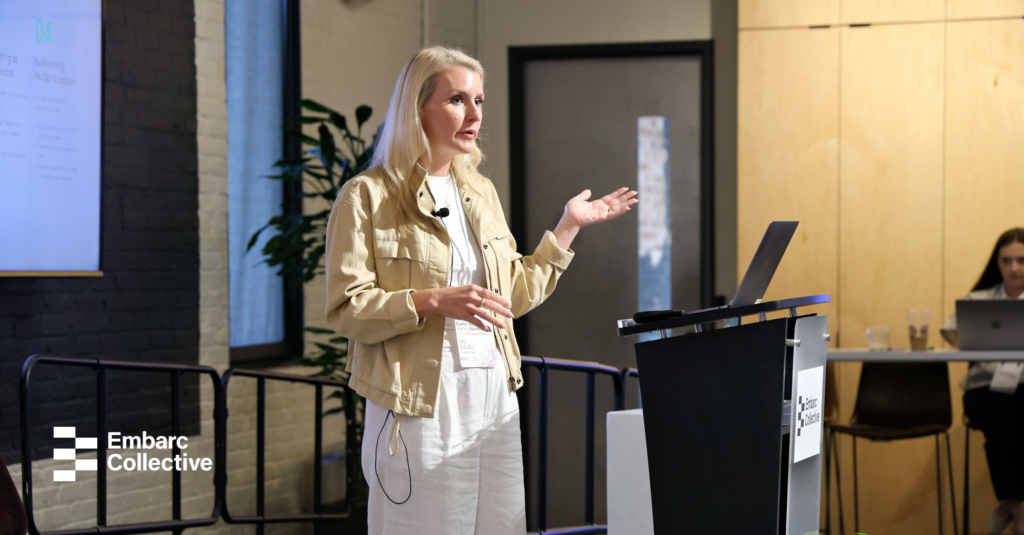
Jess shared a practical, founder-first approach to building early-stage go-to-market traction, emphasizing that strong growth begins with deeply understanding customers before attempting to scale. The session focused on how founders can identify product-market fit through repeatable customer patterns, leverage warm networks and partnerships for early demand generation, and build a sustainable sales learning loop before investing heavily in automation or outbound teams.
In this session, Jess also stressed the importance of founder-led sales in the earliest stages, encouraging attendees to treat every customer interaction as a source of insight that sharpens positioning, messaging, and ideal customer profiles. From building thought leadership on LinkedIn to instrumenting CRM and sales data early, the session reinforced that scalable growth comes from disciplined experimentation, strong operational foundations, and consistent engagement with the customers founders are ultimately building for.
“Pricing Your Product for Early Traction” featuring Kristen Koenig, B2B Sales Strategy Coach, Embarc Collective, and Vice President and General Manager of AI GTM, RingCentral
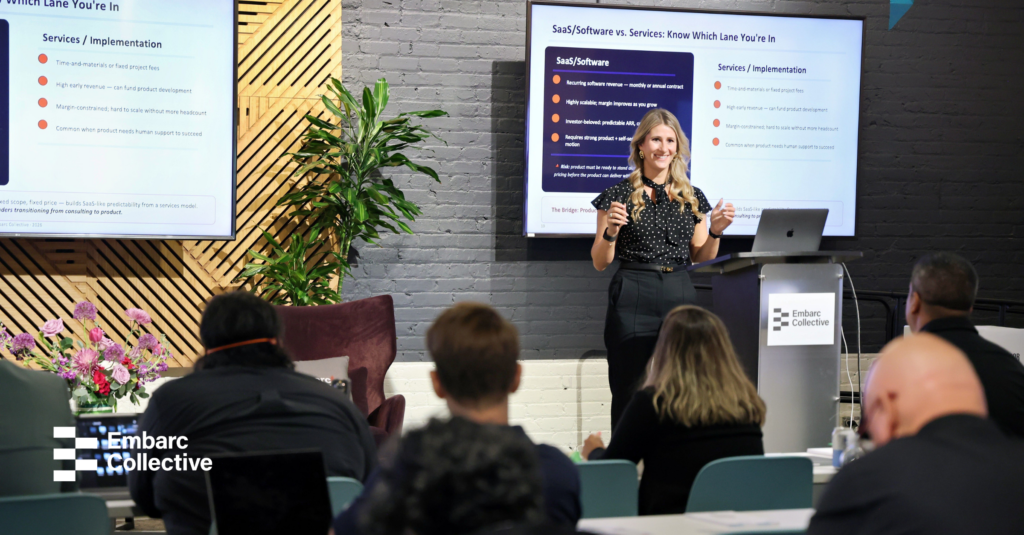
Kristen Koenig led a thoughtful discussion on how pricing shapes far more than revenue — influencing customer perception, market positioning, and long-term growth from the earliest stages of a company’s journey. The session explored how founders can use pricing strategically to communicate value, test customer behavior, and align their business model with how buyers actually experience and measure outcomes. Drawing on examples from SaaS leaders like Slack, HubSpot, and Snowflake, Koenig emphasized that pricing should evolve alongside the company itself, encouraging founders to treat pricing as an iterative process rather than a one-time decision.
As AI continues reshaping software and services, the conversation also highlighted the growing shift toward usage- and outcome-based pricing models tied directly to customer value creation. Koenig encouraged founders to think carefully about the “unit of value” their product delivers, while avoiding common early-stage pitfalls like overreliance on services or overly complex pricing structures that create friction for customers. Throughout the session, the message remained clear: the strongest pricing strategies are rooted in a deep understanding of customer needs, clear positioning, and a willingness to continuously test and adapt as markets evolve.
Panel: “Financing Your Venture Beyond Traditional Fundraising”
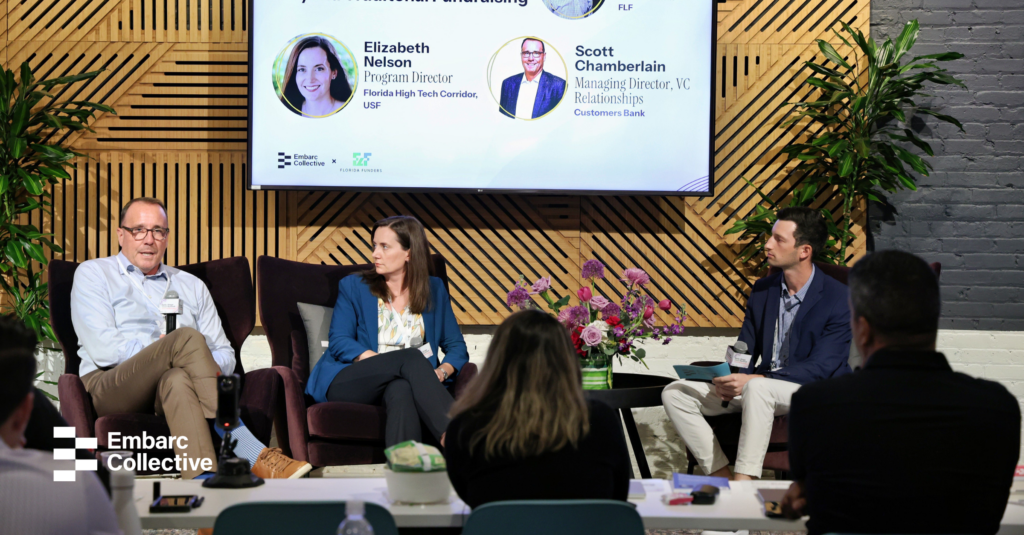
Moderator: Zach Brodsky, Senior Associate of Investments, FLF
Panelists:
- Elizabeth Nelson, Program Manager, Florida High Tech Corridor at USF
- Scott Chamberlin, Managing Director, VC Relationships and Customers Bank
This panel explored how founders can strategically leverage alternative funding sources beyond traditional venture capital to extend runway, reduce dilution, and accelerate growth. Drawing from firsthand experience across venture banking and non-dilutive federal funding programs, the discussion highlighted how tools like SBIR/STTR grants and venture debt can help startups fund high-risk innovation while preserving equity and maintaining operational flexibility.
Panelists also emphasized that choosing the right capital strategy depends heavily on timing, business model, and long-term company goals. From aligning with government agencies on deep-tech R&D to layering venture debt alongside equity rounds, the conversation reinforced the importance of thoughtful “capital stacking” and strong communication across founders, investors, and lenders. As fundraising markets become more competitive, attendees were encouraged to view financing not as a one-size-fits-all path, but as a strategic toolkit that evolves alongside the business.
Interested in applying for the 2027 Early-Stage Venture Summit? Be sure to complete the interest form to be added to next year’s email list.