Back to All Posts
Learn about upcoming events and the latest startup news—delivered to your inbox weekly.
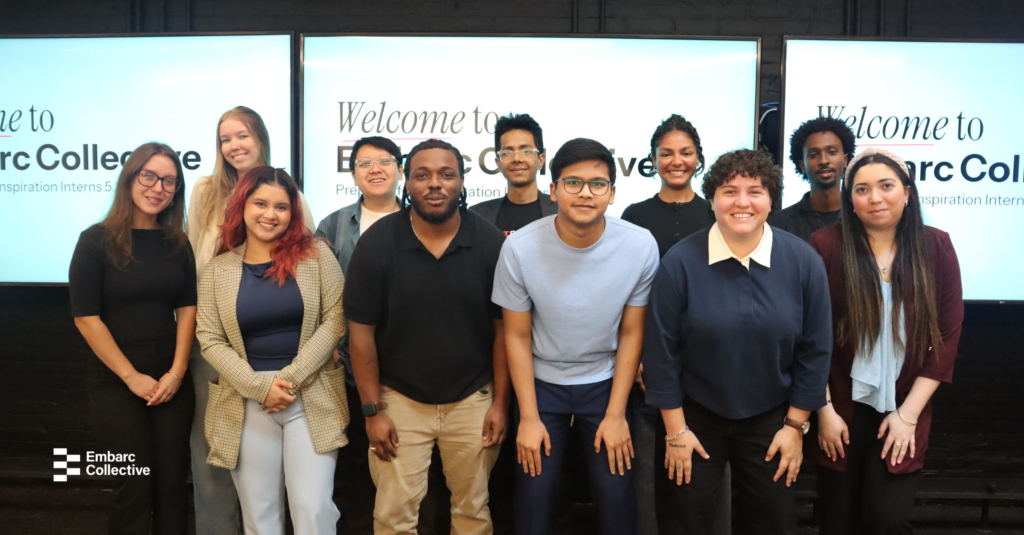
As students return to campus for the fall semester, Embarc Collective is celebrating the first year of an expanded partnership with the Genspiration Foundation that is creating more opportunities for University of South Florida and FUSE Program students to experience what it means to build and work inside an early-stage company.
What began as a summer internship program has evolved into a year-round talent initiative. For the first time in 2026, Embarc Collective and the Genspiration Foundation offered paid internship opportunities across the spring, summer, and fall semesters, connecting students with hands-on roles at Embarc Collective member companies.
The response demonstrated just how much interest exists at the intersection of collegiate talent and entrepreneurship.
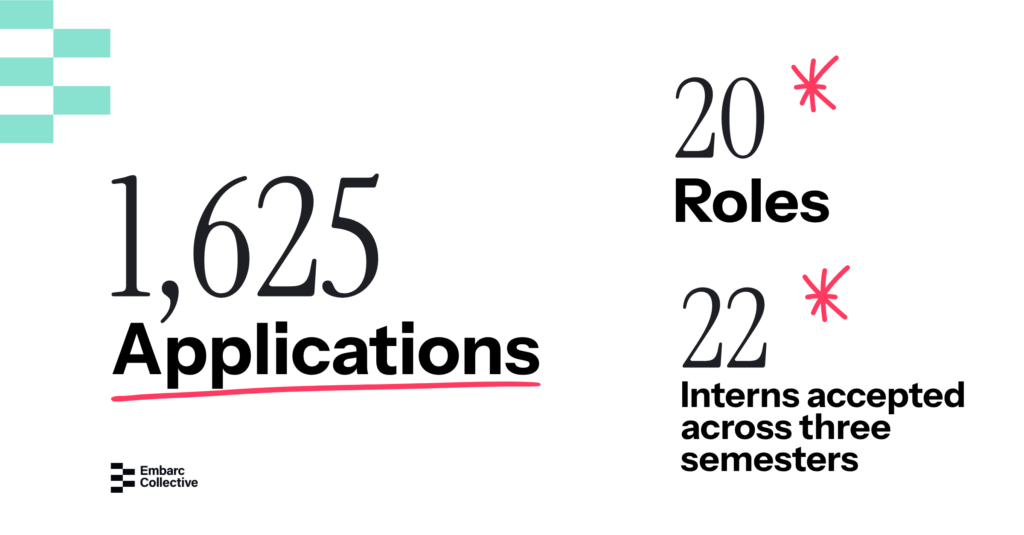
Across 2026, the program received 1,625 applications for just 20 internship roles:
- Spring: 175 applications
- Summer: 1,245 applications
- Fall: 205 applications
- 20 participating Embarc Collective member companies
- 22 interns accepted across the three semesters
Those numbers tell part of the story. More importantly, they reflect growing demand on both sides of the talent equation.
From Summer Internships to a Year-Round Talent Pipeline
The Genspiration Foundation was created by USF President Emerita Dr. Judy Genshaft and Steve Greenbaum to support education, health, and community and economic development through initiatives that help individuals reach their potential and contribute to their communities.
Embarc Collective’s partnership with the Foundation brings that mission into Tampa Bay’s startup ecosystem. Through the program, USF and FUSE Program students gain paid, hands-on experience working alongside founders and startup teams, while participating Embarc Collective member companies gain access to emerging talent from across the region.
After initially offering internships during the summer, the expanded partnership announced in 2025 created opportunities for students to participate throughout the academic year. That evolution matters as Embarc Collective’s community continues to grow. More founders are looking for ways to tap into student talent, while more students are showing an interest in gaining experience inside startups and technology companies.
The result is a talent pipeline that can grow alongside Tampa Bay’s entrepreneurial ecosystem.
More Than an Internship
A defining part of Genspiration is what happens beyond each student’s day-to-day responsibilities.
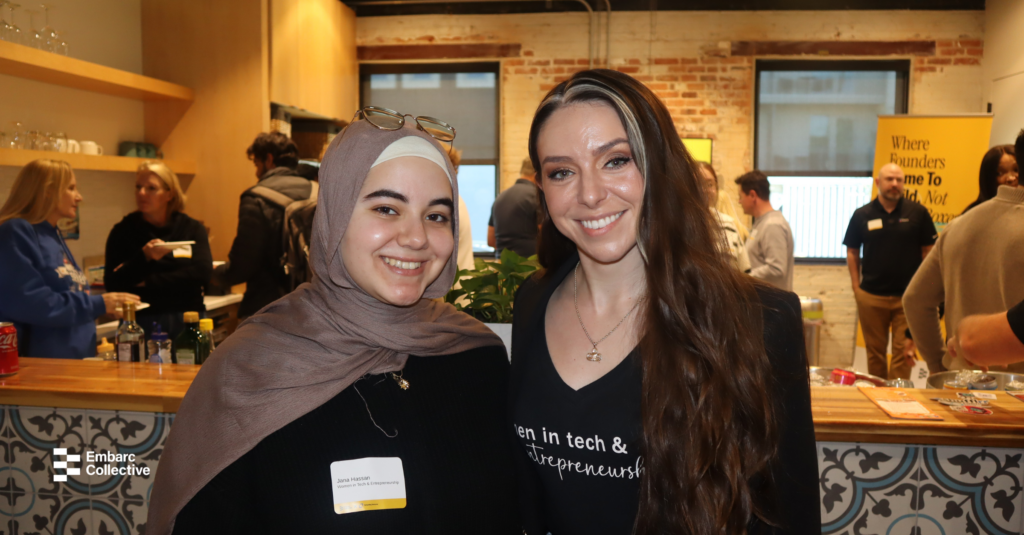
Interns aren’t simply placed with a startup and left to navigate the experience on their own. Embarc Collective surrounds the internship with coaching, dedicated programming, access to the broader Embarc Collective community, and opportunities to learn directly from founders and experienced business leaders.
That wraparound experience gives students a closer look at the realities of early-stage companies. Startups offer an environment where roles can evolve quickly, problems rarely arrive with predetermined solutions, and small teams give young professionals opportunities to see the direct impact of their work.
For students, that means gaining more than a line on a résumé. They can develop the adaptability, critical thinking, communication, and problem-solving skills that will serve them whether they ultimately join a startup, build a company themselves, or pursue another career path.
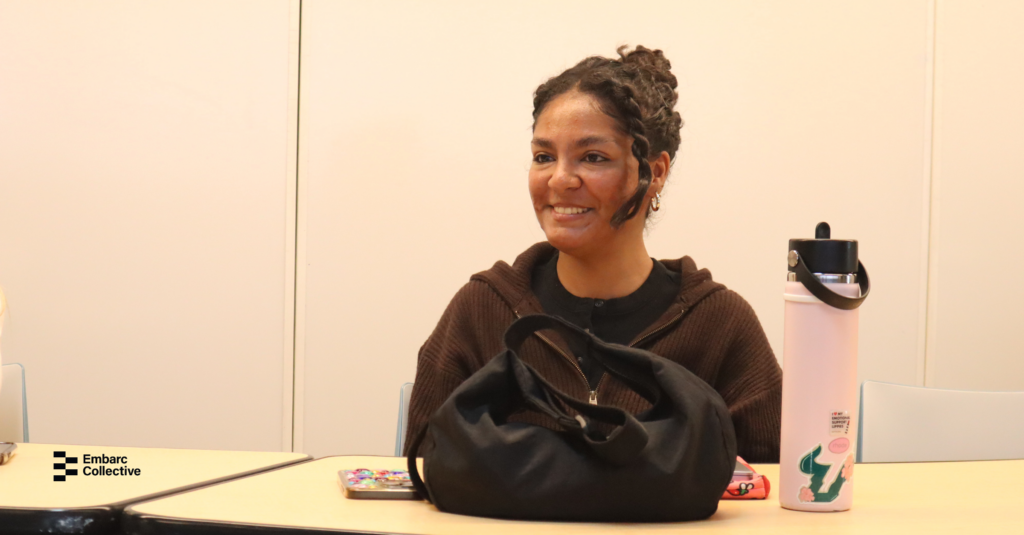
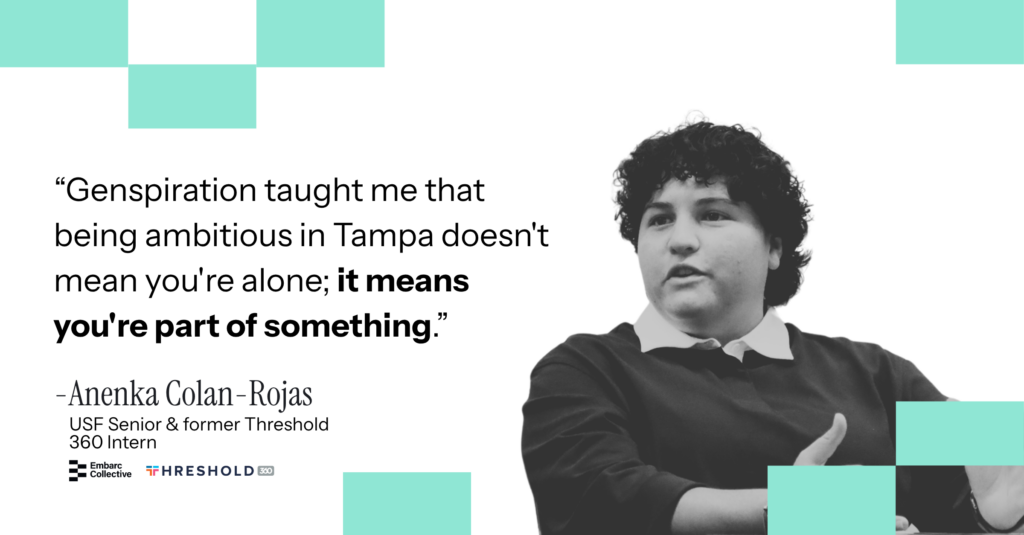
Anenka Colan-Rojas, a senior at USF and former Threshold 360 intern, states, “Genspiration taught me that being ambitious in Tampa doesn’t mean you’re alone; it means you’re part of something. I’ve learned that the best growth happens when you’re surrounded by people executing at the highest level, not just talking about it but seeing other founders move with intention, build with integrity, and scale with purpose. That impacted me as an intern, student founder, and individual. It really is who you surround yourself with, and it is really about the environment you thrive in. I continue to stay inspired and continue to see tremendous growth in my endeavors. Genspiration is absolutely amazing and has shaped me truly.”
Participating companies benefit, too. Interns bring new perspectives and skills into their teams while allowing founders to engage with emerging talent before students enter the workforce full-time.
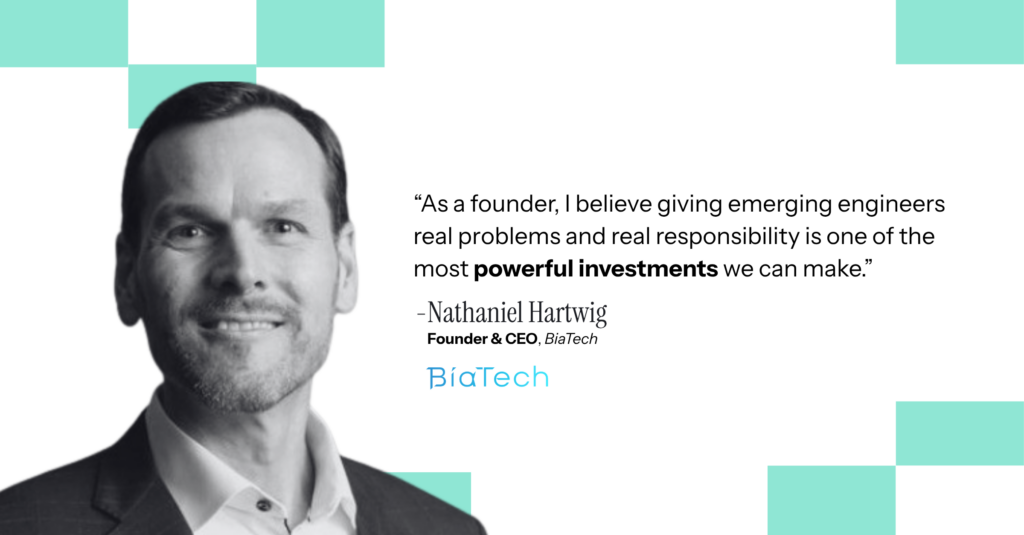
When discussing his experience with his intern Dayne Guy, Nathaniel Hardwig says “The future of AI is physical, and young engineers like Dayne will help build it. Genspiration made it possible for Dayne to join BiaTech this summer, helping develop robotic vision and navigation systems for industrial yards. His work contributed to our vision of intelligent machines that help people operate more safely and effectively. As a founder, I believe giving emerging engineers real problems and real responsibility is one of the most powerful investments we can make. We brought the Tampa three-person team to Houston for a month to work directly with clients and the robots to bring the solution to life. Real deadlines. Real deliverables. Real clients… This is not an internship; it is a kickstart on a life of value creation. Genspiration is helping Tampa’s next generation gain the experience to build tomorrow’s technologies—and tomorrow’s companies.”
Experiential Learning Meets Entrepreneurship
That emphasis on real-world experience also reflects a broader conversation happening at USF.
During Embarc Collective’s Q3 Builder Series, USF President Moez Limayem discussed how higher education must evolve as artificial intelligence changes how students learn and work. He outlined a future centered on four areas: critical thinking, interpersonal skills, experiential learning, and entrepreneurship.
As AI makes it easier to generate answers and automate increasingly complex tasks, Limayem argued that students must continue developing the ability to think independently, communicate effectively, and solve problems. He also emphasized the importance of practical experience, describing internships and other experiential learning opportunities as an increasingly important part of preparing students for their careers.
Those priorities are already embedded in the Genspiration experience. Students work alongside startup teams where they are expected to contribute, learn quickly, collaborate with others, and apply what they have learned in the classroom to real business challenges.
At the same time, exposure to entrepreneurship can expand what students believe their careers can look like. They don’t only meet the people building companies; they get to work beside them.
Three USF Presidents, One Growing Relationship
One moment this summer brought the evolution of that relationship into particularly sharp focus.
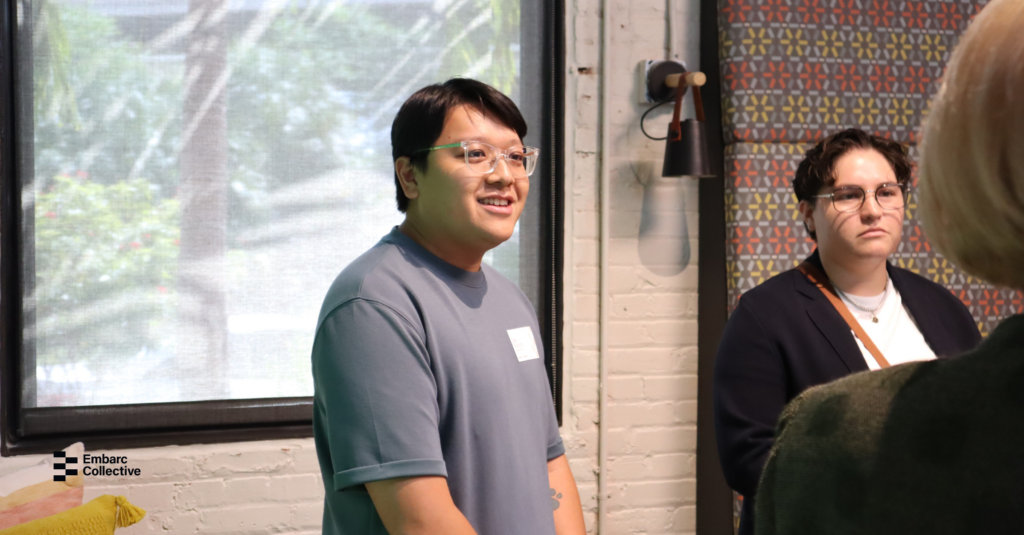
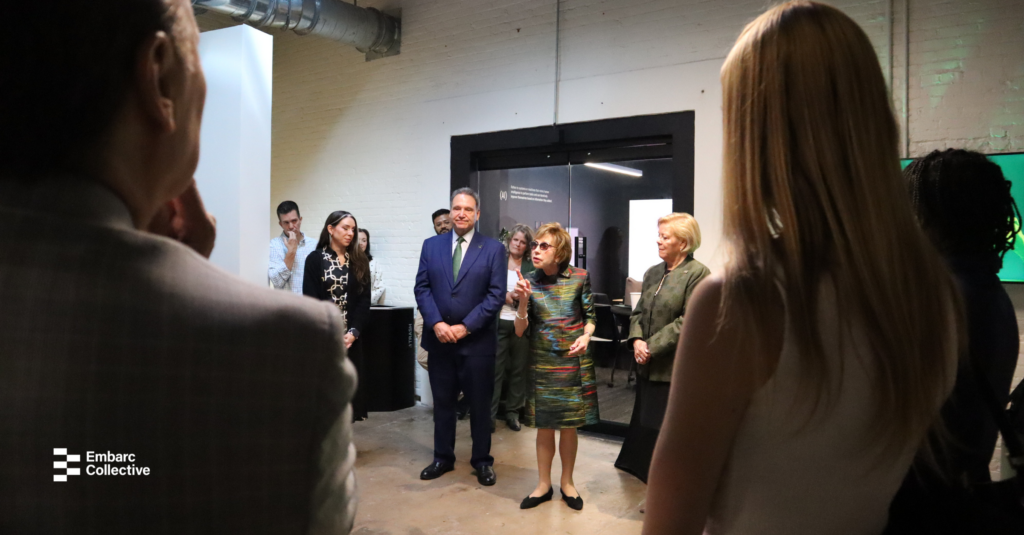
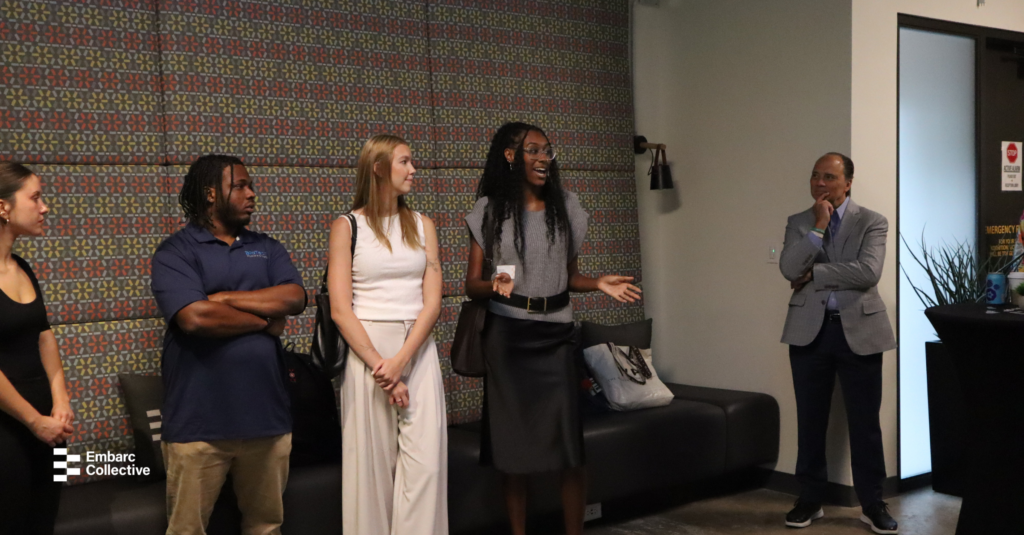
Following Limayem’s Builder Series conversation in August, current and alumni Genspiration interns gathered at Embarc Collective for an intimate coffee meetup with USF President Moez Limayem, former USF President Rhea Law, and President Emerita Judy Genshaft, Co-Founder of the Genspiration Foundation.
Bringing together three leaders who have each played an important role in USF’s history gave students a unique opportunity to hear candid perspectives on leadership, entrepreneurship, innovation, and career growth while building relationships that can help inform where their own careers take them next.
The gathering also represented something larger. Genshaft’s vision helped create the Foundation behind the program. The partnership continued to grow during Law’s presidency. Now, as Limayem emphasizes experiential learning, entrepreneurship, and stronger connections between USF and Tampa Bay’s innovation economy, the program enters its next chapter.
That continuity demonstrates how the relationship between USF, the Genspiration Foundation, and Embarc Collective has grown alongside the internship program itself.
Investing in the People Who Will Build What Comes Next
The first year of the expanded Genspiration program confirmed something the numbers make difficult to ignore: students want opportunities to engage with startups, and growing companies need more ways to connect with talented students.
But building a strong talent pipeline requires more than making the introduction.
It means giving students meaningful work, surrounding them with experienced people who can help them grow, and exposing them to career paths they may not otherwise encounter. It also means helping founders develop relationships with the next generation of professionals who can contribute to the companies being built across Tampa Bay and Florida.
And as the program continues to evolve, its purpose remains the same: allowing the next generation of talent not just to observe Tampa Bay’s startup ecosystem, but to become part of building it.